
These 28 refrigerator organization tips and hacks help Indian families keep milk, curd, vegetables, leftovers and the freezer in order so less food goes to waste. They work for double door fridges, single door models and the mini fridge in a hostel room.
You need steel or glass boxes, a tray, some masking tape and a little baking soda. Start with the zone map, because putting food in the right place is the biggest change.
At a glance
Hacks on this page
28Best for
Families, couples and hostel roomsTime needed
About 1 hour for a full resetWhat you need
Square boxes, a tray, masking tape, baking sodaWorks for
Single door, double door and mini fridges
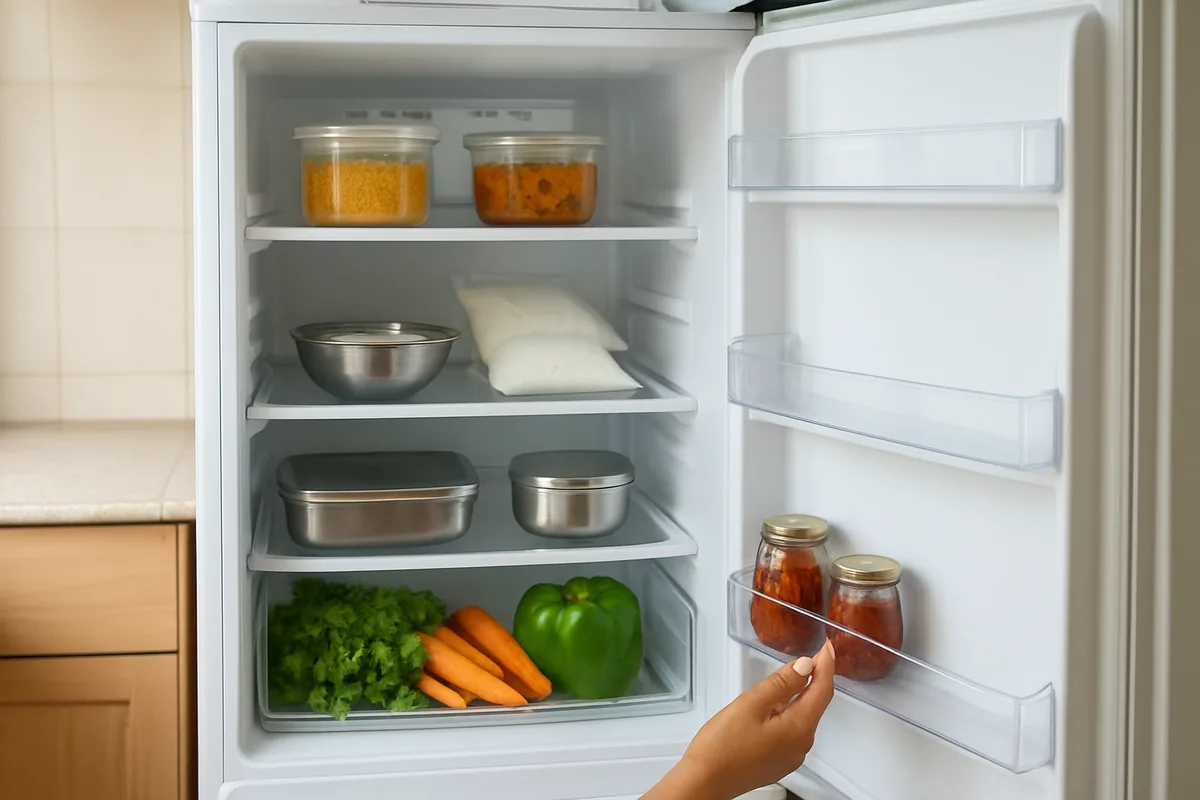
Map your fridge first: refrigerator organization tips and hacks by zone
A fridge is not the same cold everywhere. The door is the warmest part, the shelf just under the freezer and the back wall are the coldest, and the crisper drawer holds moisture. Put each food where its temperature suits it and half the waste disappears.
| Zone | Best for | Keep out |
|---|---|---|
| Door shelves | Pickles, sauces, chutney bottles, butter, water bottles | Milk and curd, they spoil faster here |
| Top shelf | Leftover dal and sabzi, ready food, kneaded atta | Raw meat |
| Middle shelf | Milk, curd, paneer, cheese, eggs in a box | Hot food straight from the stove |
| Bottom shelf | Raw chicken, fish or meat in a covered steel box | Anything ready to eat below it |
| Crisper drawer | Leafy greens, carrots, beans, capsicum | Onions, potatoes, bananas |
| Freezer | Peas, grated coconut, ginger garlic paste cubes, ice | Glass bottles full of liquid |
- Raw food on the lowest shelf. Always keep raw meat or fish at the bottom in a covered box. If it drips, nothing below it can be spoiled, which is the most basic food safety step.
- Milk at the back, not in the door. The door swings open many times a day and warms up each time. A milk packet or curd bowl at the back of the middle shelf stays fresh a day longer.
- Leave a gap at the back wall. Do not push boxes against the back wall. Cold air needs room to move, and food touching the wall can freeze while the front stays warm.
Steel and glass containers: fridge organization hacks that save space
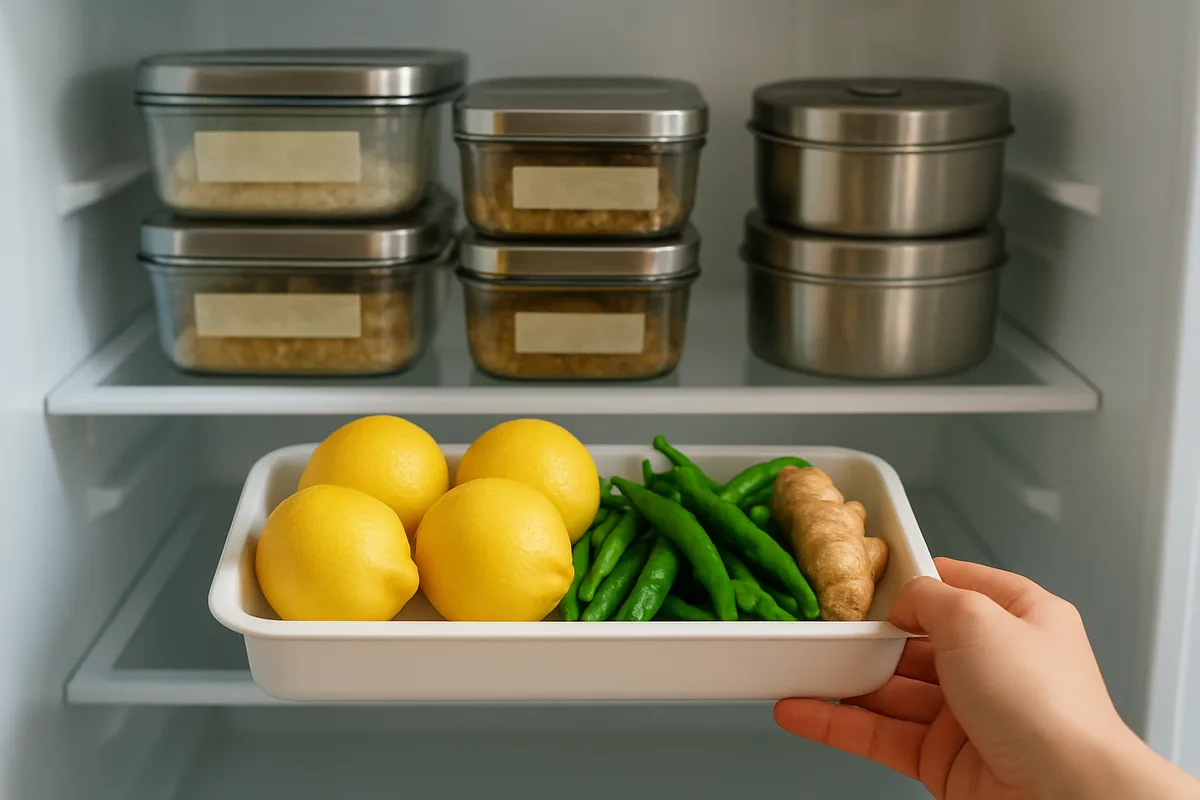
Open bowls with a plate on top waste room and spread smells. Matching boxes stack, and stacking is the secret of every neat fridge.
- Square beats round. Square or rectangular boxes fit side by side with no gaps. Round bowls leave dead corners, so you fit fewer of them on each shelf.
- Glass for leftovers, steel for raw. Use glass boxes for cooked food so the contents show without lifting the lid. Keep steel boxes for raw meat, kneaded atta and things you do not need to see.
- A tray as a drawer. Put a shallow plastic tray on a deep shelf and keep small things like lemons, green chillies and ginger on it. Pull the tray out like a drawer instead of digging behind bigger boxes.
- Masking tape dates. Stick a strip of masking tape on each leftover box and write the day it was cooked with a marker. Anyone in the family can see what to eat first.
- Egg box stays. Keep eggs in their own box or a covered tray on a shelf, not in the door slots. They stay cooler and do not crack when the door is shut hard.
Vegetables, fruit and herbs that last longer
Indian vegetables go limp fast in a fridge that is too dry or too wet. Small changes keep them crisp through the week.
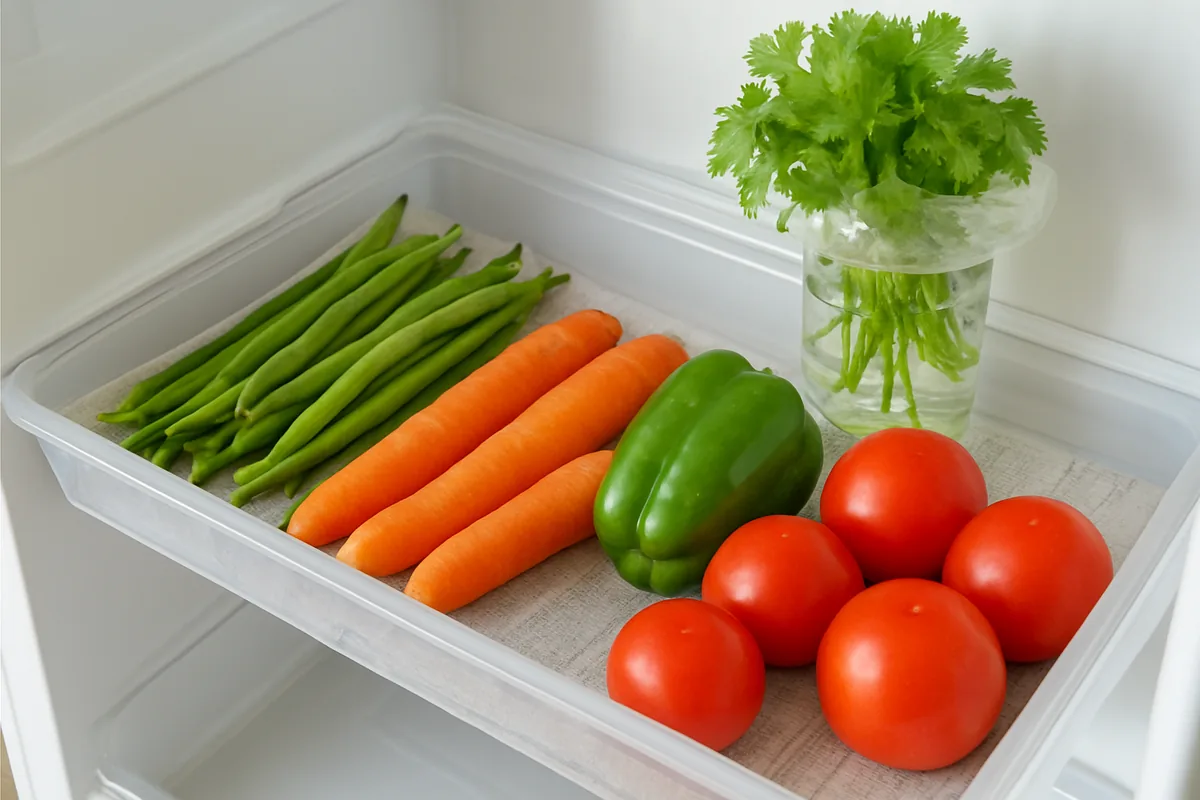
- Coriander in a jar. Trim the stems of coriander or mint and stand the bunch in a glass jar with a little water, then cover the leaves loosely with a plastic bag. It stays green for nearly a week.
- Newspaper lining in the crisper. Line the vegetable drawer with a sheet of newspaper or a dry cotton cloth. It soaks up extra moisture so tomatoes and capsicum do not rot from below.
- Dry before you store. Wash greens only when you are about to cook. If you must wash them first, spin them dry in a cloth and wrap them in a paper towel before they go in.
- Keep these out. Onions, potatoes, garlic and bananas do better in a basket in a cool, dark corner. In the fridge onions turn soft and potatoes get a sweet taste.
Milk, curd, batter and leftovers
These are the things Indian families open the fridge for most. Give them a fixed spot and nobody has to search.
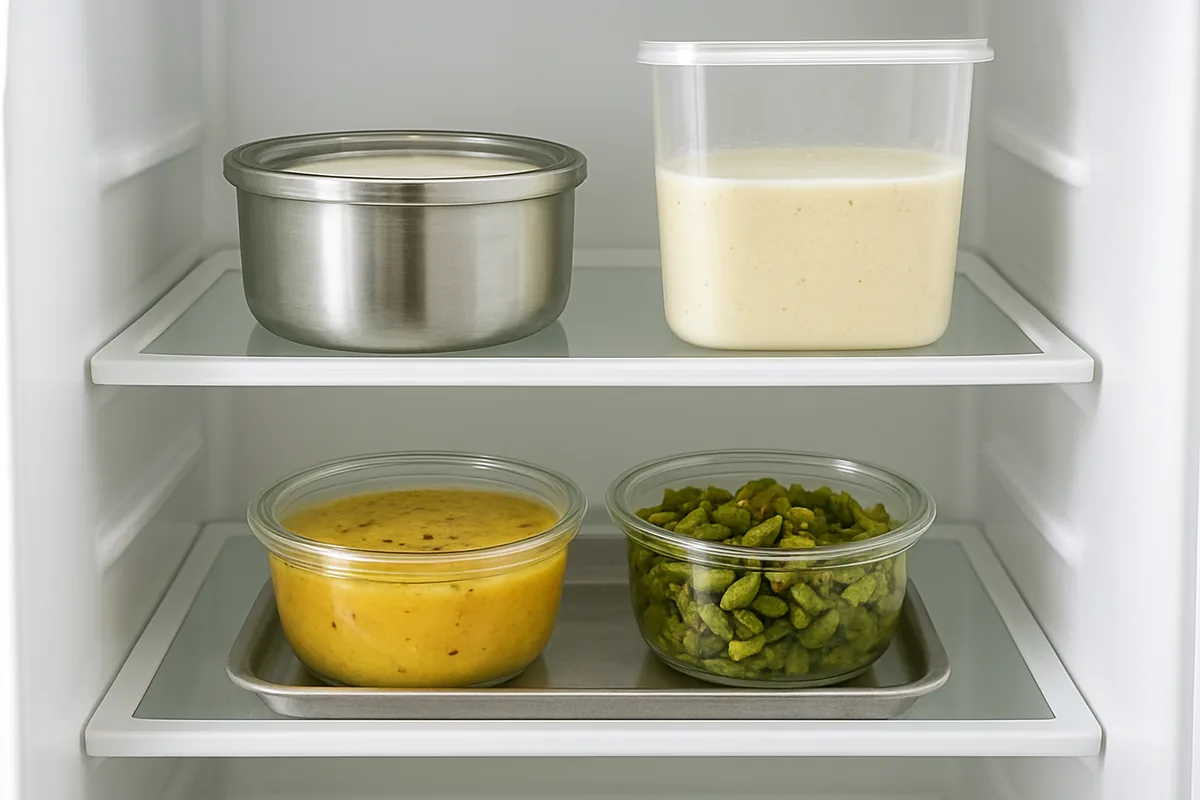
- Curd setting box. Keep one steel box only for curd and put it at the back of the middle shelf. When you set fresh curd, the old box comes to the front so you use it first.
- Batter goes up top. Idli and dosa batter keeps rising. Store it in a tall box filled only halfway, with the lid a little loose, on a shelf with room above it.
- Cool before you store. Let dal and sabzi cool for about an hour on the counter, then put them in. Very hot food warms everything near it, but do not leave cooked food out for many hours either.
- The eat first box. Keep one small tray at the front of the top shelf for food that must be finished today. Kids and family members check it before they reach for anything new.
- Two day rule for leftovers. Most cooked Indian food is best eaten within one or two days. If a box has been there longer than that and you are not sure, throw it out.
Freezer and deep freezer organization hacks
The freezer in most Indian homes holds ice trays, a lost packet of peas and a block of frost. A few rules make it useful again.
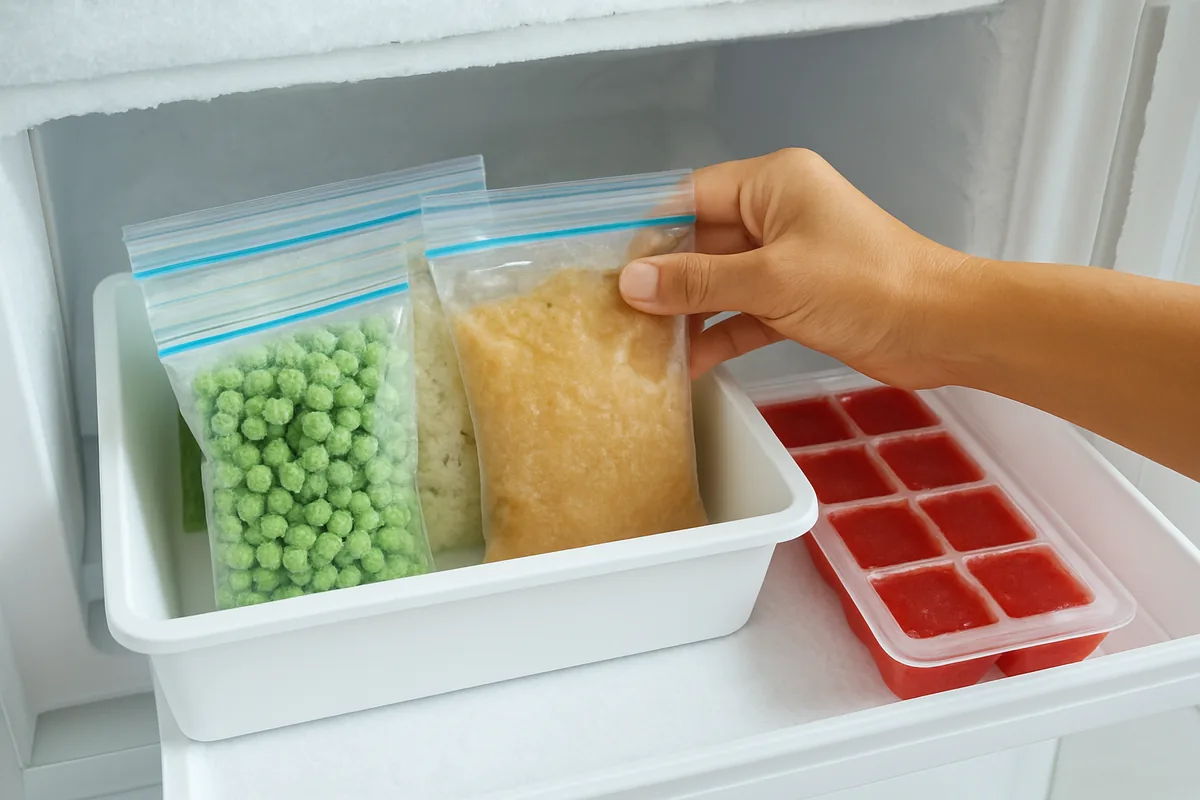
- Freeze flat in zip pouches. Spread ginger garlic paste, tamarind pulp or grated coconut flat in a zip pouch and freeze it. Flat packs stack like books and you can snap off just what you need.
- Ice tray portions. Freeze tomato puree, curry leaves in water or leftover chutney in an ice tray, then pop the cubes into a pouch. One cube is one portion.
- Stand pouches in a box. In a freezer drawer or chest freezer, stand flat pouches upright in an open box, sorted by type. You flip through them instead of digging to the bottom.
- Defrost before the ice gets thick. If your freezer is not frost free, defrost it when the ice is about the thickness of a finger. Thick frost wastes power and steals space.
Smell, monsoon and power cut hacks
Indian weather and power supply bring problems a fridge manual never mentions.
- Baking soda bowl. Keep a small open bowl of baking soda on a back shelf. It soaks up smells from onion, fish and pickles. Change it every two or three months.
- Wipe with lemon water. Once a week, wipe shelves with warm water and a squeeze of lemon on a soft cloth. It cuts grease and leaves the fridge smelling fresh, with no harsh chemicals near food.
- Keep the door shut in a power cut. A full fridge stays cold for a few hours if the door stays closed. Put a few water bottles in the freezer during the summer so they act as ice packs when the power goes.
- Check the door seal in the rains. Damp weather can make rubber seals sticky and mouldy. Clean the folds of the seal with a soft brush and soapy water so it shuts tight and keeps cold in.
Small fridge organization hacks for hostels and PGs
A single door fridge or a mini fridge in a shared room needs strict rules. Students will find more room tips in our hacks for school life.
- One shelf per person. In a shared fridge, give each roommate one shelf or one basket. Nobody eats anyone else's food by mistake, and fights stop.
- Bottles lie down. Lay water bottles on their side on the bottom shelf, wedged with a rolled towel. They take less height than standing bottles.
- Weekly clear out. Pick one day, like Sunday night, to empty out anything old. A small fridge fills up in days if you skip this.
For the rest of the home, see our kitchen organization hacks, the full list of organization hacks and our cleaning hacks for wiping the fridge.
Questions people ask
How should I arrange my fridge in an Indian home?
Keep leftovers on the top shelf, milk and curd in the middle, raw meat in a covered box at the bottom and vegetables in the crisper. Use the door only for pickles, sauces and water bottles.
How long can I keep cooked dal or sabzi in the fridge?
Most cooked food is best eaten within one or two days if it was cooled and covered soon after cooking. Throw it away if it smells sour or looks slimy, and do not taste it to check.
How do I stop my fridge from smelling?
Cover every box, keep an open bowl of baking soda at the back and wipe the shelves weekly with lemon water. Remove anything old or spilt the same day you notice it.
What should not go in the fridge?
Onions, potatoes, garlic and bananas keep better outside in a cool, dark basket. Bread and whole tomatoes can stay out for a day or two if your kitchen is not very hot.
What are good freezer organization hacks for a small freezer?
Freeze pastes and grated coconut flat in pouches and stand them upright in a box. Use ice trays for portion cubes. Defrost before the frost gets thick so you keep the space.
Is it safe to eat food after a power cut?
If the door stayed shut and the food still feels cold, it is usually fine. Milk, meat, fish and cooked food that feel warm or smell off should be thrown away.