

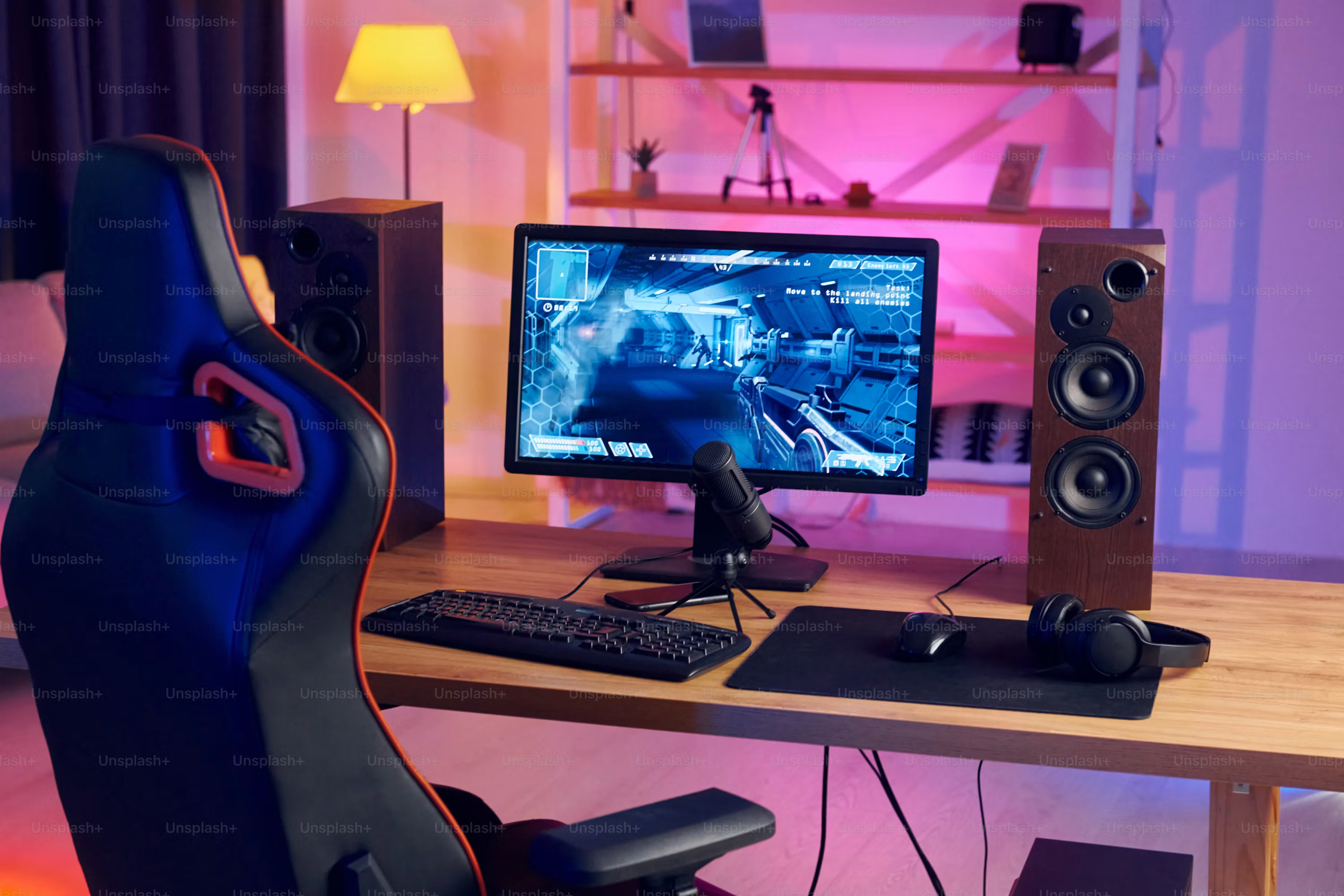
Gaming desktops are no longer limited to esports arenas or personal entertainment. Design firms, simulation centers, gaming cafés, educational institutions, AI development teams, and technology companies invest heavily in high-performance systems that eventually become part of scheduled hardware refreshes. Once replacement cycles begin, managing dozens of retired machines becomes a logistical challenge rather than a technical one.
Instead of allowing valuable equipment to depreciate inside storage rooms, organizations often work with a bulk Gaming desktops buyer capable of evaluating complete inventories through a structured purchasing process. This approach reduces administrative effort, accelerates workspace recovery, and allows businesses to convert idle assets into immediate financial returns while ensuring responsible electronic recycling.
Why Enterprise Gaming Desktop Disposal Requires a Different Approach
Replacing five gaming desktops differs significantly from retiring fifty or even several hundred systems spread across multiple departments. Every unit carries different specifications, operational history, upgrade configurations, and remaining component value. Attempting to sell these systems individually often results in inconsistent pricing, extended negotiations, and weeks of unnecessary coordination.
Professional bulk purchasing streamlines the entire process through centralized evaluation, organized collection scheduling, and consolidated transactions. Rather than assigning employees to manage countless buyer inquiries, organizations complete the entire disposal cycle through a single coordinated workflow that minimizes operational disruption.
Bulk transactions also deliver measurable operational benefits:
- Faster warehouse and office clearance
- Centralized inventory evaluation
- Simplified documentation for multiple assets
- Scheduled pickup across business locations
- Immediate value recovery after verification
- Environmentally responsible recycling procedures
What Determines the Value of Gaming Desktop Inventories?
A gaming desktop is rarely valued as a single product. Experienced evaluators examine the internal hardware because individual components frequently influence the overall quotation more than external appearance. A system equipped with current-generation graphics hardware, high-speed NVMe storage, premium cooling assemblies, and expandable memory presents a different market opportunity than an entry-level configuration.
Equally important is inventory consistency. Businesses selling identical workstation configurations often simplify the assessment process because technicians can evaluate specifications more efficiently. Mixed inventories remain valuable, although every model is inspected according to its hardware profile, operational condition, and reuse potential rather than receiving a standard bulk rate.
Graphics Hardware Influences Overall Valuation
Dedicated graphics cards frequently represent one of the most valuable elements inside gaming desktops. Their generation, performance capability, cooling condition, and operational stability significantly affect market demand, making GPU evaluation an important step during large inventory assessments.
Storage and Memory Affect Resale Potential
High-capacity SSDs, enterprise-grade hard drives, and upgraded memory configurations increase equipment versatility. Systems containing balanced hardware specifications generally attract stronger valuations because they remain suitable for multiple commercial applications beyond gaming alone.
Why Component-Level Assessment Delivers Better Returns
Unlike standard office computers, gaming desktops contain specialized hardware that can significantly influence their market value. Modern graphics processing units, unlocked processors, high-frequency memory modules, liquid cooling systems, and premium motherboards are assessed individually because each component contributes differently to the overall quotation. A detailed inspection produces a far more accurate valuation than estimating every system by age alone.
Businesses that maintain service records, hardware specifications, and upgrade histories often simplify the evaluation process. Clear documentation enables faster verification while helping buyers distinguish customized systems from standard factory configurations. This level of transparency supports quicker decision-making and allows both parties to complete transactions with greater confidence.
Graphics Processing Units Drive Market Demand
Dedicated graphics cards remain one of the strongest value indicators inside gaming desktops. Their architecture, memory capacity, thermal performance, and operational stability influence demand across gaming, rendering, engineering, and AI computing applications, making GPU inspection an essential part of enterprise inventory evaluations.
Upgrade History Adds Context During Evaluation
Many organizations improve existing systems instead of replacing complete workstations. Processor upgrades, larger SSDs, expanded memory, or enhanced cooling solutions can positively influence resale potential because they extend usability beyond the original manufacturer specifications.
Cosmetic Condition Is Only One Consideration
Surface scratches or minor cabinet wear rarely determine the complete quotation. Functional testing, internal hardware health, cooling efficiency, and component compatibility generally provide a more reliable picture of a system’s remaining commercial value than appearance alone.
Organized Inventories Speed Up Collection
Grouping identical desktop models, labeling asset quantities, and separating accessories before inspection allows collection teams to complete evaluations more efficiently. Businesses benefit from shorter collection windows while reducing interruptions to daily operations.
Preparing Gaming Desktop Inventories Before Collection
Well-organized inventories create a smoother purchasing experience for both sellers and evaluators. Preparing systems before pickup reduces inspection time and helps verify hardware configurations more efficiently, especially when organizations manage large quantities across multiple departments or business locations.
Simple preparation steps include:
- Create an inventory with model specifications.
- Group identical gaming desktop configurations together.
- Separate accessories from complete systems.
- Disconnect devices before scheduled collection.
- Keep equipment accessible for inspection.
- Arrange pickups according to operational schedules.
Supporting Sustainable IT Asset Recovery Through Responsible Recycling
Technology refresh cycles generate more than outdated hardware. They also create an opportunity to recover valuable materials, extend the lifecycle of usable components, and reduce unnecessary electronic waste. Gaming desktops contain aluminum, copper, circuit boards, processors, storage devices, and graphics hardware that can often be reused or recycled through structured IT asset recovery instead of ending up in landfills. Organizations that incorporate responsible disposal into their asset management strategy support both operational efficiency and long-term sustainability.
Professional recycling providers follow organized collection and processing procedures that help businesses retire aging equipment without adding complexity to infrastructure upgrades. Consolidated pickups, accurate inventory assessments, and environmentally responsible recycling create a practical solution for companies replacing high-performance desktop fleets across multiple locations.
Final Thoughts
Ready to unlock the remaining value in retired gaming desktops instead of letting them gather dust? Every hardware refresh presents an opportunity to recover value while simplifying IT asset management. Businesses looking for an experienced gaming desktops buyer in bulk in Dubai can depend on E-Waste IT Recycling for organized pickup, transparent evaluations, responsible electronics recycling, and efficient processing of enterprise gaming desktop inventories. Whether replacing systems in gaming cafés, educational laboratories, creative studios, or corporate technology environments, a structured purchasing process helps reduce storage demands, improve asset recovery, and support environmentally responsible disposal without disrupting business operations.

